
zPRIME 3.0: Redefining 4D Imaging Radar Excellence
TL;DR
Zadar Labs introduces zPRIME 3.0, a leap forward in 4D imaging radar technology. Its unique software-defined architecture, unparalleled resolution, and transformative perception capabilities fundamentally differentiate it from conventional radar systems and even other 4D radars on the market.
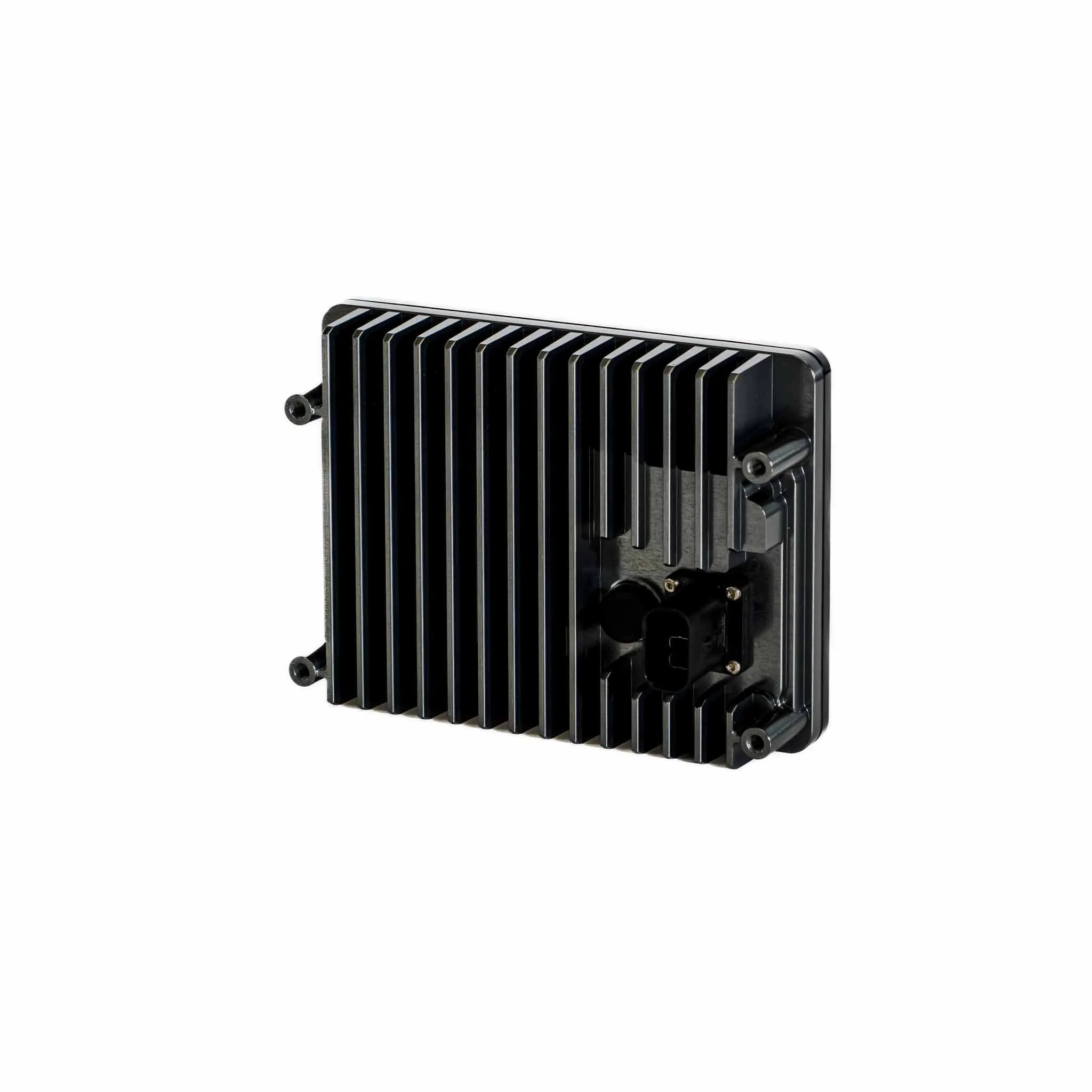
At Zadar Labs, we believe the future of autonomous systems and advanced sensing hinges on truly intelligent perception. For years, radar has been a cornerstone sensor, but its limitations in delivering rich, dense point clouds have confined it to a supporting role. Until now.
Enter zPRIME 3.0 – not just an iteration, but a revolution in 4D imaging radar. This isn't another radar; it's a paradigm shift, engineered from the ground up to challenge the status quo and deliver perception capabilities previously thought impossible for radar technology.
What is Zadar Labs' zPRIME 3.0?
zPRIME 3.0 is the culmination of Zadar Labs' relentless pursuit of engineering excellence in software-defined radar. It's a high-resolution, full-waveform 4D imaging radar platform designed for mission-critical applications across various sectors, from autonomous vehicles and robotics to industrial automation and security. What truly sets it apart is its ability to deliver LiDAR-like point cloud density and accuracy, coupled with the inherent advantages of radar – robust performance in all weather conditions, privacy preservation, and long-range detection.
The Zadar Labs Difference: Beyond Conventional Radar
To understand what makes zPRIME 3.0 unique, we must first look at where other radars fall short.
Limitations of Traditional Radar Systems
Sparse Point Clouds: Traditional radar typically provides sparse data points, making precise object classification and contouring challenging.
Angular Resolution Limitations: Conventional radars struggle with distinguishing closely spaced objects, particularly at longer ranges or in complex scenes.
Doppler Ambiguities: Difficulty in accurately separating static objects from moving ones, or discerning the velocity vectors of multiple objects simultaneously.
Environmental Sensitivity: While generally robust in adverse weather, simpler radars can suffer from increased clutter and false positives.
The Rise of 4D Radar – But Not All Are Equal
The term '4D radar' is gaining traction, signaling a move beyond mere range and velocity to include elevation (the fourth dimension). However, the implementation varies wildly. Many '4D' radars are essentially enhanced traditional radars that still grapple with insufficient angular resolution and limited vertical field of view to truly create a dense, actionable 4D point cloud.
zPRIME 3.0: Engineering a New Standard
Zadar Labs' zPRIME 3.0 doesn't just add a dimension; it redefines the very fabric of radar perception through several core innovations:
1. Software-Defined Radar (SDR) Architecture
This is the bedrock of zPRIME 3.0's differentiation. Unlike hardware-optimized, fixed-function radars, zPRIME 3.0's SDR core allows for unprecedented flexibility and intelligence:
Dynamic Waveform Generation: The system can dynamically adapt its transmit waveforms, pulse repetition frequencies, and modulation schemes in real-time, optimizing performance for specific scenarios (e.g., maximizing range, enhancing near-field resolution, or mitigating interference).
Adaptive Signal Processing: Our proprietary algorithms can be updated and refined over-the-air, constantly improving detection, classification, and tracking capabilities without hardware modifications. This future-proofs the investment and allows for continuous enhancement.
Cognitive Radar Capabilities: zPRIME 3.0 learns from its environment, optimizing its operational parameters to maintain peak performance even in highly dynamic or cluttered settings.
2. Unrivaled Resolution: Spatial and Temporal
zPRIME 3.0 pushes the boundaries of resolution in all four dimensions, delivering a perception quality that rivals, and in many ways exceeds, other sensor types:
High Angular Resolution: By employing advanced MIMO (Multiple-Input Multiple-Output) arrays and sophisticated beamforming techniques, zPRIME 3.0 achieves angular resolutions far superior to conventional radars. This enables precise separation of objects mere centimeters apart, even at hundreds of meters.
Superior Elevation Sensing: Critical for understanding 3D scenes, zPRIME 3.0 provides fine-grained vertical resolution, distinguishing between road signs, overhead obstructions, and ground-level obstacles.
Dense Point Clouds: The combination of high spatial resolution and advanced processing results in point clouds that are significantly denser and richer than those from typical 4D radars, approaching LiDAR-like fidelity.
Precision Velocity Measurement: Our advanced Doppler processing allows for highly accurate velocity estimation for multiple independent objects, crucial for predictive path planning and collision avoidance.
3. Full Waveform Data and Advanced Perception Engines
Many radars, even some 4D ones, rely on extracting only peak detections. zPRIME 3.0 processes the full waveform data, extracting maximum information from every radar return. This, coupled with our custom-built perception stack, allows for:
True Object Classification: Beyond 'point cloud clustering,' zPRIME 3.0 can discern object shape, size, and even material characteristics with high confidence, leading to more robust classification (e.g., pedestrian, cyclist, vehicle type).
Advanced Environmental Modeling: Building precise, dynamic 3D maps of the environment, identifying changes, and predicting movements.
Interference Mitigation: Actively identifying and nullifying interference from other radar systems, ensuring clear perception in complex RF environments.
4. Robustness in All Conditions
While other sensors falter, zPRIME 3.0 thrives. Its inherent radio frequency nature grants it immunity to darkness, fog, rain, snow, and dust, providing an uninterrupted, reliable stream of data where cameras and LiDAR struggle or fail entirely.
The Competitive Edge: Why zPRIME 3.0 Stands Apart
When compared to other radar offerings, zPRIME 3.0 delivers a distinctive advantage:
Beyond Raw Data: We provide not just raw radar data, but processed, actionable perception outputs that directly feed into autonomous decision-making systems.
Scalable and Adaptable: The SDR platform ensures that investment in zPRIME 3.0 is an investment in future capabilities. New features and performance enhancements are delivered through software, not costly hardware upgrades.
True Independence: While complementary to other sensors, the fidelity of zPRIME 3.0's output means it can function as a primary, standalone perception sensor for many critical tasks, enhancing system redundancy and safety.
Looking Ahead: The Impact of zPRIME 3.0
The implications of zPRIME 3.0 are profound. It empowers industries to:
Achieve higher levels of autonomy and safety in vehicles, drones, and robots.
Enhance security and surveillance with reliable, all-weather detection and tracking.
Improve efficiency and safety in industrial and logistics operations through precise object localization and collision avoidance.
Zadar Labs is not just building radars; we are building the foundational perception layer for the next generation of intelligent systems. zPRIME 3.0 is a testament to this vision, delivering unparalleled resolution, intelligent processing, and unwavering reliability.
